

FOREIGN RULE AND THE
NATIONAL LIBERATION MOVEMENT
...We now come upon a truly Great Man, who embodies an
entire [18th] Century...
It can truly be said that within the context of the History of our intellectual
development, the entire Century during which he dispensed the Light and
Enlightenment
can be called a Mekhitarian Century...The great Academy of Sciences he founded
operates to this day according to his plan and covenants...'
-- LEO
YAKOB MEŁAPART.
PUBLISHED PRINTED ARMENIAN
BOOKS IN VENICE IN 1512. THE SEAL USED ON THE BOOKS
PUBLISHED BETWEEN 1512-1513 HAD THE DOUBLE SQUARE
[ONE WITHIN THE OTHER] AND THE DOUBLE-BAR CROSS
[LOWER BAR ENCIRCLED FORMING THE ALCHEMICAL CROSS]
WITH THE INITIALS D. I. Z. A.: DEI SERVUS - IAKOBUS - ZANNI
ARMENIUS.
[SEE BELOW]
Written by Gevork Nazaryan
Beginning from the XIth century, waves of nomadic Turkic tribes from Central Asia began destructive raids into Armenian Plateau -- Caucasus -- Near East. The savage nature and the led lifestyle showed little care of human lives and human civilization. Armenian villagers were killed, raped and taken as captives -- cities, towns and villages were looted and obliterated. The Turkic tribes lived off of the seized bread of other peoples. Large migrations took place out of Greater Armenia to other places, to Europe and beyond.
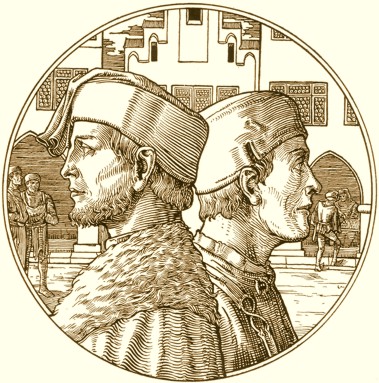
Many Armenians fled to Bulgaria, Romania, Poland and Ukraine and Western Europe. Yerevan's inhabitants were no exception to the migrations and many in fear of their lives left. In the XVth century, the Ottoman Turks invaded and plundered Yerevan.
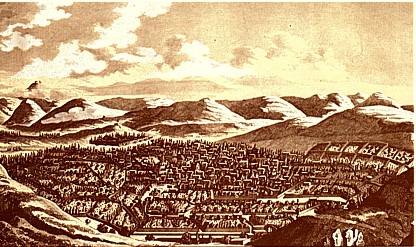
Y E R E V A N I N 1 6 7 3. E N G R A V I N G
B Y J E A N C H A R D I N.
During this period the Ottoman Turks and later the Safavid Iranians fought for control of Armenia. The great number of nomadic Turkic tribes the most numerous being the Ak-koyunlu, Khara-koyunlu and Khizilbash had a devastating effect on the settled towns and cities of Armenia from the XVth to the late XVIIIth century.
THE SEAL OF ABGAR DPIR [WITH THE PATRIARCHAL CROSS AND THE DOVE
OF MERCY WITHIN A LAUREL OF GLORY -- WINGED ANGEL HEADS
ABOVE AND BELOW. ONE OF THE GREAT XVITH CENTURY
BOOK PUBLISHERS OF THE PROMINENT VENETIAN ARMENIAN
COMMUNITY. ABGAR DPIR WAS INSTRUMENTAL IN
RAISING THE NATIONAL CONSCIOUSNESS AND
HARNESSING ALL OF THE HEALTHY FORCES
THAT LED THE NATIONAL LIBERATION STRUGGLE.
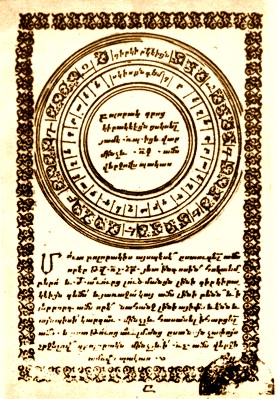
ASTROLOGICAL B O L O R A K [ALL-WHEEL] OF ABGAR DPIR.
ROME. 1584.
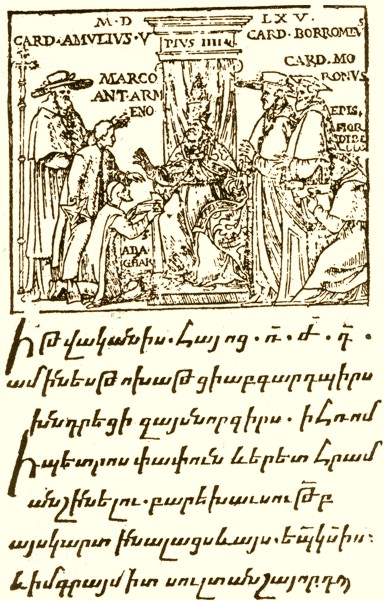
AN ENGRAVING FROM A BOOK PUBLISHED IN VENICE IN 1565 BY ABGAR
DPIR,
DEPICTING ABGAR PRESENTING A BOOK OF PSALMS TO THE CURIA OF POPE PIUS IV.
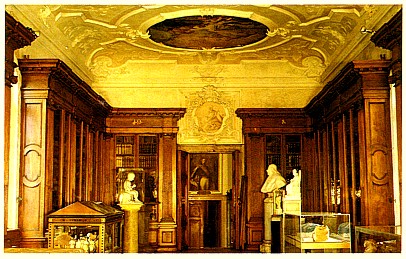
THE LIBRARY OF OLD EUROPEAN PUBLICATIONS AND MUSEUM IN SAN
LAZZARO
The Armenians looked forward to the day of Liberation from brutal tyranny of the Turks. Plans for liberating the Armenian people and Armenia from foreign oppression were made in the XVIth, XVIIth and XVIIIth during covert meetings organized by the Catholicoi of
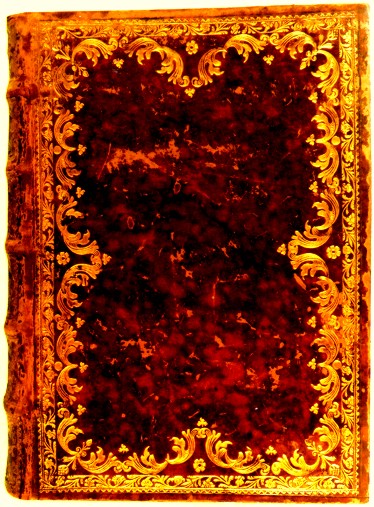
THE BEAUTIFUL LEATHER-BOUND DICTIONARY OF ABBOT MEKHITAR.
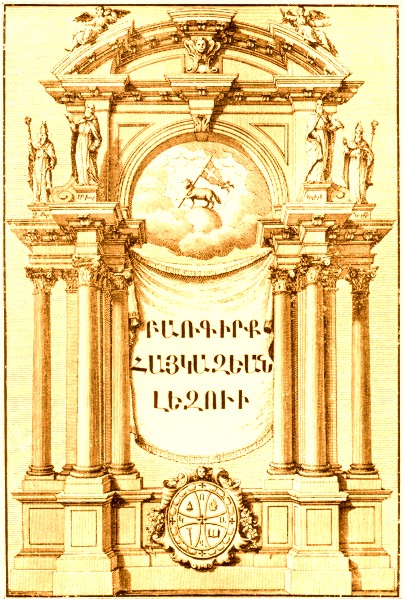
BARGIRK‛
HAYKAZEAN LEZUI [DICTIONARY OF ARMENIAN LANGUAGE].
THE FRONTISPIECE OF THE MONUMENTAL 1749 WORK DEDICATED TO THE
STUDY OF ARMENIAN LANGUAGE BEARING THE INSIGNIA OF THE
MEKHITARIST ORDER -- EQUILATERAL SPLINT CROSS PATTEE WITHIN
TWO CIRCLES [THAT IN BETWEEN CONTAIN 16 SPHERES
DIVIDED INTO FOUR SEGMENTS BY FOUR CROSSES]
WITH BELL, FLAME, STAFF AND AN OPEN BOOK MARKING
THE FOUR-FOLD + DIVISION MARKED WITH
LETTERS -WO. KEN. VEW AND AYB.
LEADING TO THE CRUX IN THE CENTER.
THE SEAL OF THE ORDER UPHELD BY A WINGED ANGEL
SURROUNDED BY LILIES. NOTE THE LAMB BEARING
THE FLAG OF ST. GEORGE ABOVE.
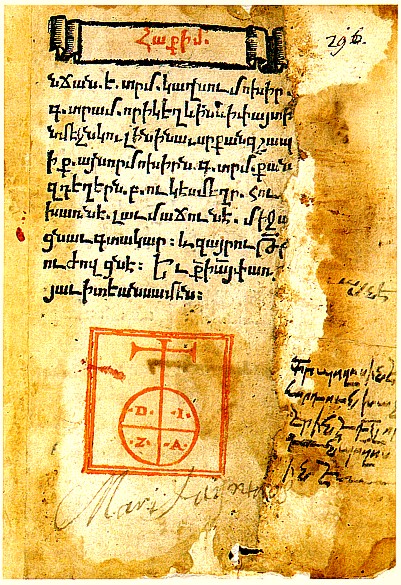
H. MEŁAPART'S
INITIALED .D. .I. .Z. .A. WOODCUT] SEAL -- DOUBLE
SQUARED PATRIARCHAL CROSS FORMING THE ANCIENT EQUAL ARMED CROSS
WITHIN A CIRCLE BELOW. MEŁAPART
ON FRONTISPIECE OF
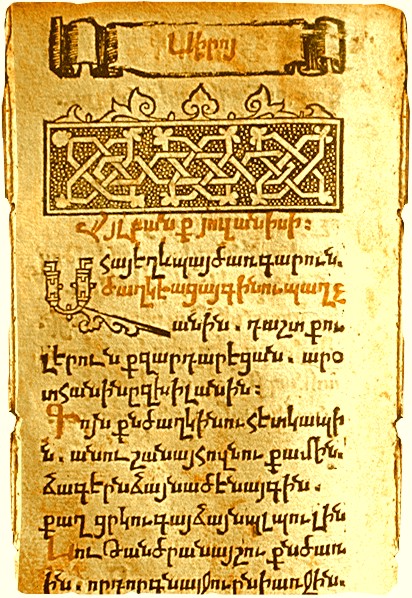
URBAT‛AGIRK [BOOK OF FRIDAY] PUBLISHED IN VENICE IN 1512
THE FIRST PRINTED ARMENIAN BOOK.
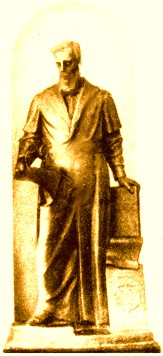
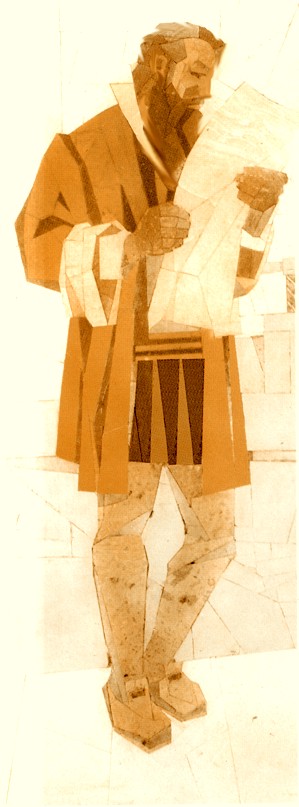
STATUE OF MEŁAPART IN THE MATENADARAN.
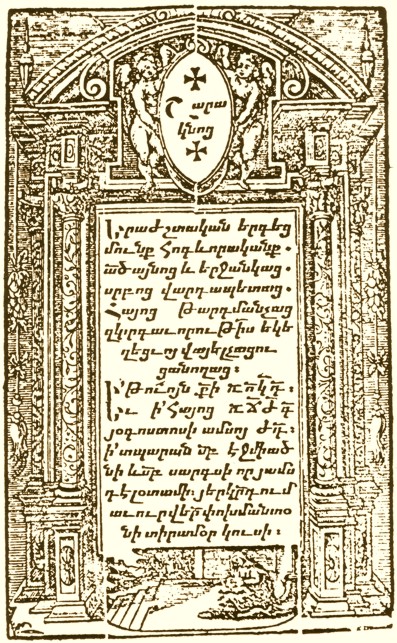
TITLE-PAGE OF ŠARAKNOC‛
PUBLISHED IN AMSTERDAM IN 1664.
WITHIN AN ARCH OF TWO PILLARS TIPPED BY INNER CIRCLE [FIRE]
WITHIN THE CIRCLE TOPPED BY LEFT AND RIGHT SPINNING
GOLDEN SPIRALS. IN THE CENTER STANDS THE VULVA [EYE] FLANKED BY TWO
ANGELIC BEINGS WITHIN THE FEMININE PRINCIPLE THE MALE PRINCIPLE
TWO EQUAL ARMED CROSSES AND THE 8 LETTER WORD [2 ROWS OF 4]
ŠARA KNOC‛.
FERTILITY FLORAL SYMBOLS OF NEW LIFE EMBELLISH THE GRIEVING MOTHER/WIDOW.
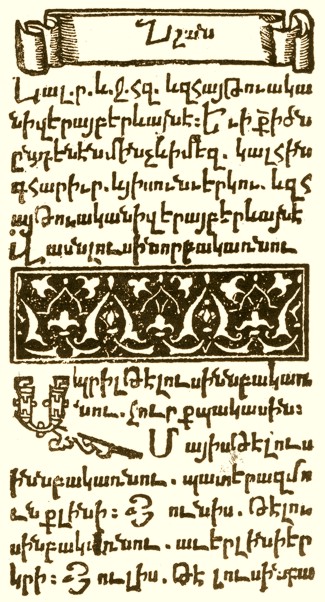
PAGE FROM A PUBLIC CALENDAR PUBLISHED IN 1513 BY Y. MEŁAPART
PRINTING HOUSE IN VENICE.
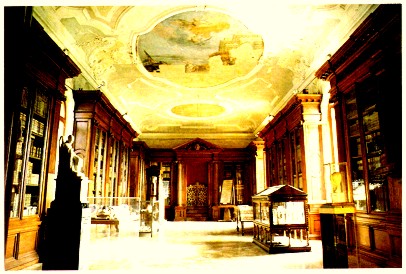
THE LIBRARY OF OLD EUROPEAN PUBLICATIONS AND MUSEUM IN SAN
LAZZARO.
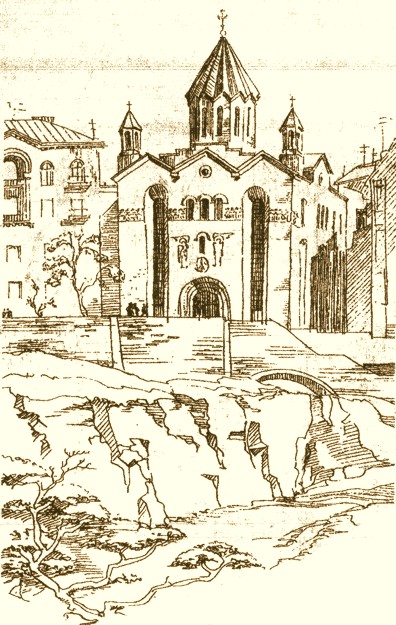
SAINT SARKIS CHURCH [1450] IN THE HEART OF THE CAPITAL
HIGH ABOVE THE HRAZDAN GORGE.
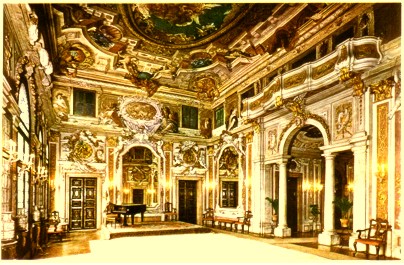
HALLS OF THE MURAT-RAFAELIAN SEMINARY
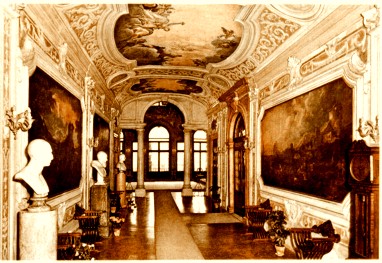
MANY LEADING MEMBERS OF INTELLIGENTSIA DURING
THE ENLIGHTENMENT ERA RECEIVED THEIR EDUCATION HERE,
TRULY YEARNING TO SEE THE LIBERATION OF THEIR HOMELAND
AND THEIR PEOPLE WHO WERE IN BONDAGE TO FOREIGN TYRANNY
BUT ABOVE ALL MANY WERE IN THE GRIPS OF IGNORANCE AND FALSE DOGMA.
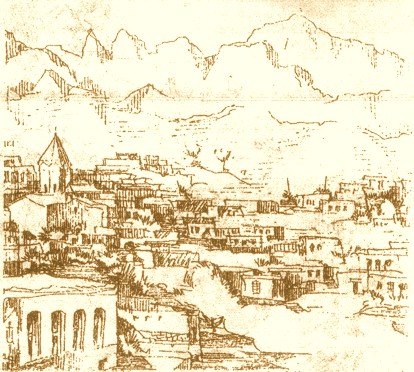
OLD MEGHRI ONE OF THE IMPORTANT STRONGHOLDS OF FREEDOM
LOVING HIGHLANDERS IN THE MOUNTAINS OF SYUNIK.
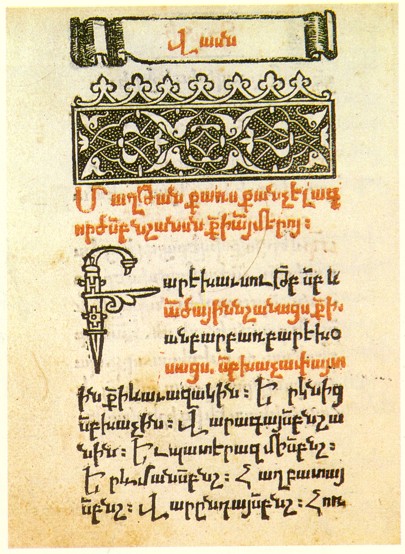
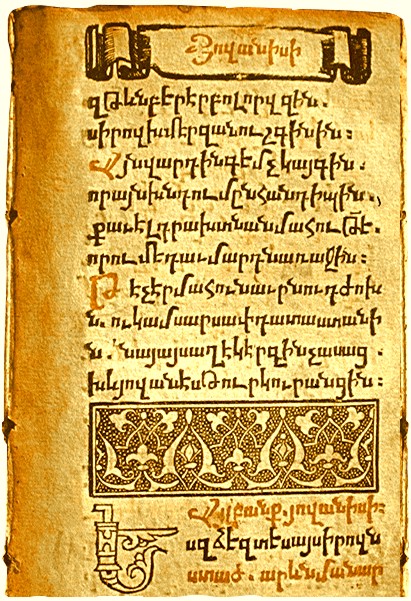
PAGES FROM URBAT‛AGIRK‛.
1512.
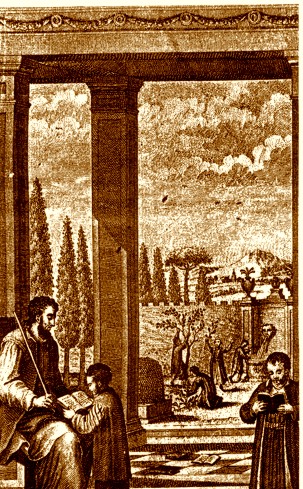
'...ARMENIAN CHILDREN MUST RECEIVE ALL-AROUND
EDUCATION BY STUDYING VARIOUS ARTS AND SCIENCES...'
EXCERPT AND ENGRAVING FROM G. AVETIKIAN'S ARMENIAN GRAMMAR.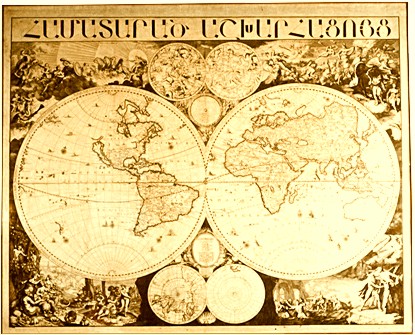
PHYSICAL MAP OF THE WORLD BY ARMENIAN CARTOGRAPHER
ŁUKAS.
AMSTERDAM, 1695.
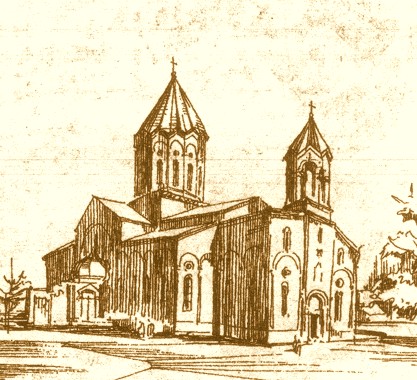
CHURCH OF THE SAVIOR IN GYUMRI, SHIRAK MARZ.
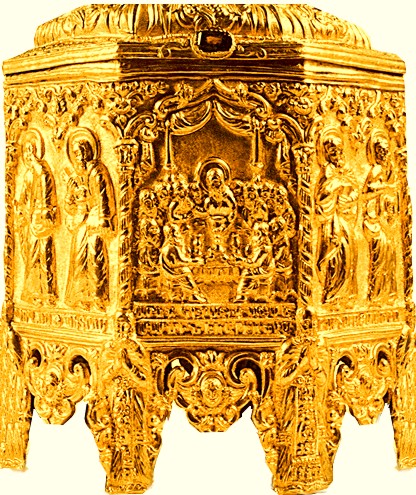
GOLD PYX [1687] FROM CAESAREA DEPICTING THE LAST SUPPER AND THE
APOSTLES.
ON DISPLAY IN THE CALOUSTE GULBENKIAN MUSEUM IN LISBON.
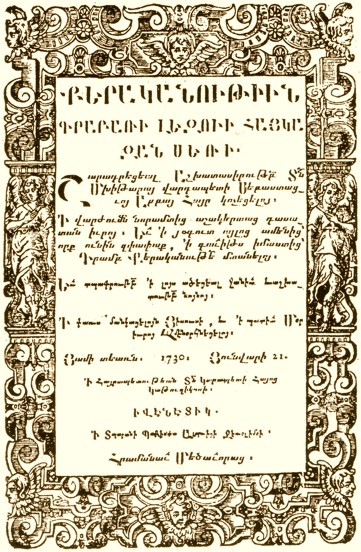
FRONTISPIECE OF GRAMMAR OF GRABAR [CLASSICAL ARMENIAN]
PUBLISHED IN VENICE BY ABBOT MEKHITAR IN 1730.
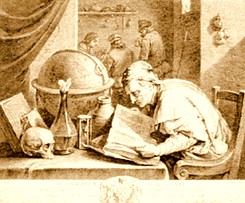
ARMENIAN ALCHEMIST WITH THE [PHALLIC] MITHRAIC CAP...
PREPARING THE ELIXIR USING THE ESSENCE OF PHILOSOPHER'S STONE...
IS IT NO WONDER THAT AN ARMENIAN [YALE GRADUATE] IN 1840s FROM A FAMILY
OF ALCHEMISTS WOULD 'DISCOVER' THE MAGIC GREEN DYE FOR
THE
$
[SERPENT OF WISDOM ON THE POLE...THE STAFF OF HIGH PRIESTS OF
THE WISDOM TEMPLES/ESCULAPIUS/GURUS ON AND ON]...AGELESS WISDOM
DOES NOT DISAPPEAR FOR IT RESIDES IN THE COLLECTIVE UNCONSCIOUS
[SOMETIMES REFERRED TO AS BLOOD MEMORY] AS AN ARCHETYPE.
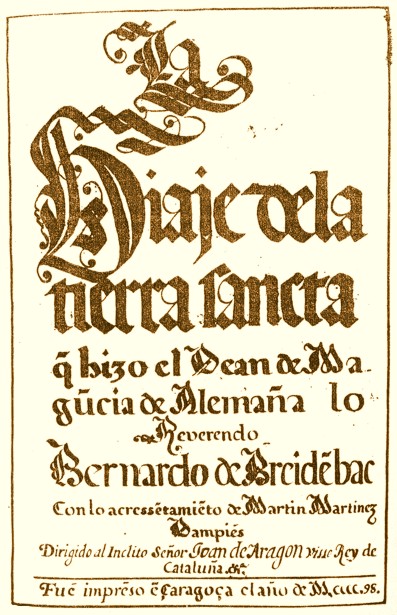
FRONTISPIECE OF BERNARD VON BREYDENBACH'S PEREGRINATIO, IN
TERRAM
SANCTAM. 1486. THE BRITISH LIBRARY, IB. 355.
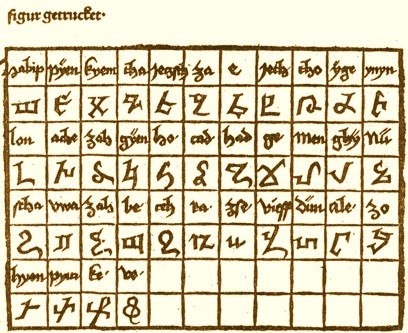
BERNARD VON BREYDENBACH'S 1486 WOODCUT OF THE 'EDENIC
ARMENIAN
ALPHABET' [THE BOOK INCLUDES A WOODCUT MAP SHOWING ARMENIA:
PARADISE/LAND OF EDEN] WITH ACCOMPANYING PRONUNCIATION OF EACH
ARMENIAN LETTER IN LATIN. THE FIRST KNOWN WOODCUT OF ARMENIAN LETTERS
AFTER [RE]INVENTION OF PRINTING. FOL. 2 RECTO, AFTER A LEAD BEARING A
WOODCUT ON THE VERSO. 36 ARMENIAN LETTERS + 38TH F [WITHOUT THE 37TH O.]
WOODCUTS AND WOODCUT FOLDING VIEWS AND A MAP, FROM DRAWINGS BY
E. REUWICH.
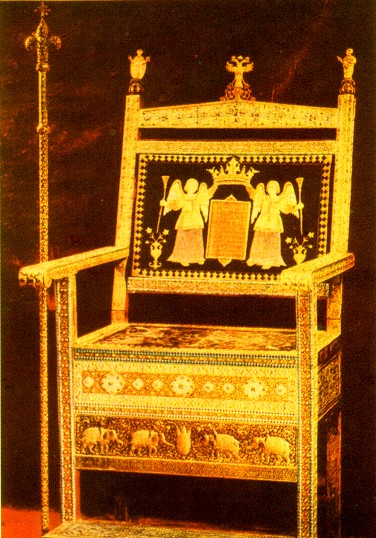
THE ARMENIAN THRONE OF TSAR ALEXEI MIKHAILOVICH ON DISPLAY IN
THE WORLD RENOWNED ARMORY CHAMBER IN KREMLIN.
In 1660, Zakar Sahratian of the prosperous Armenian community of
New Julfa, as a gesture of friendship between the Armenian and Russian people
brought with him to Moscow a precious gift that would become the new throne of
Tsar Alexei Mikhailovich [1629-1676]. The throne in all contains 897! pieces of
various kinds of large and small precious rubies, 1, 298 sea pearls, 8,030
pieces of topaz and lapis lazuli. The throne is made out of 28 pounds of pure
gold, 8 pounds of silver and The throne at that time was valued at 22, 589
rubles in gold (tens of millions of dollars in today's value). Two guardian
angels in a gold embroidery hold the crown. Imperial double headed eagle at the
center top.
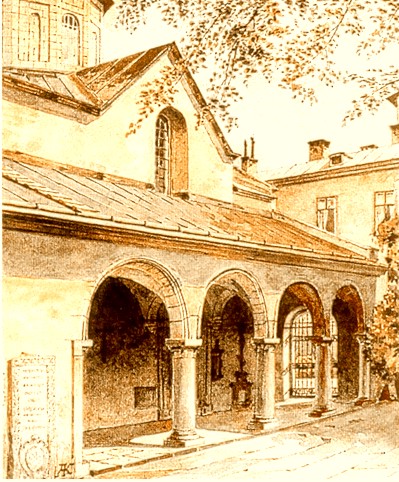
ONE OF THE COUNTLESS MEDIEVAL ARMENIAN CHURCHES THROUGHOUT
EUROPE.
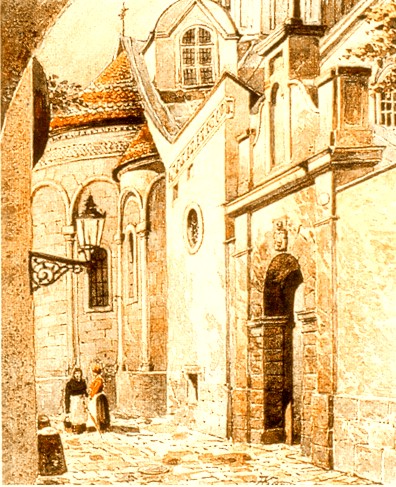
THE ARMENIAN CHURCH IN LVIV [LWOW] UKRAINE BUILT IN 1363.
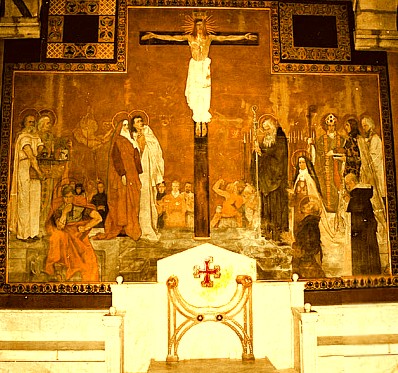
CRUCIFIXION SCENE FROM THE BREATHTAKING FRESCOES INSIDE
THE ARMENIAN CHURCH IN LVIV [LWOW] IN UKRAINE.
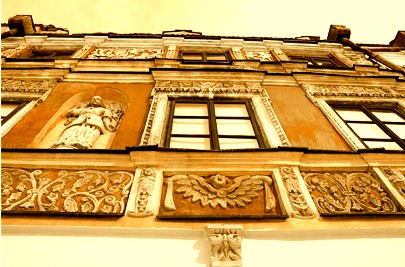
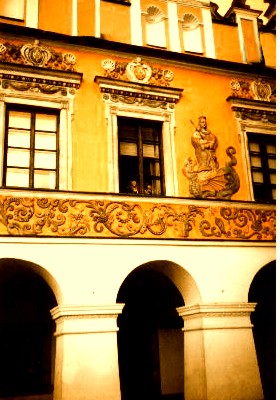
ARMENIAN STREET IN THE OLD ARMENIAN QUARTER IN WARSAW, POLAND.
THE BUILDINGS ARE EMBELLISHED WITH STUNNING RELIEFS IN BAROQUE STYLE.
the Holy See, the Armenian nobility headed by the powerful Siwnik' princes Davit' Bek and Mkhit'ar sparapet, and the emerging nouveaux riche bourgeoisie.
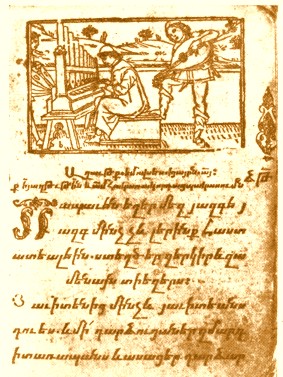
ONE OF THE PAGES PUBLISHED IN VENICE BY ABGAR DPIR
WITH TAROT-LIKE ALLEGORICAL SYMBOLISM
[LIBERATION...]. VENICE. 1565-66
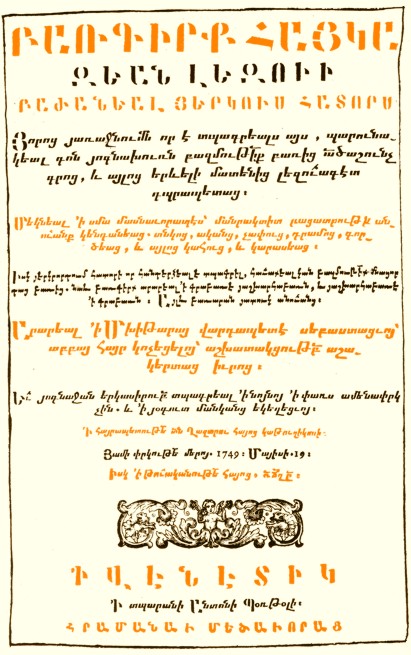
DICTIONARY OF ARMENIAN LANGUAGE IN TWO VOLUMES.
VENICE, 1749.
'...STEP CAUTIOUSLY ON THE CONSECRATED ISLAND OF
THE MEKHITARIAN FATHERS...EACH ONE OF YOUR STEPS
CAN MEET THE ASHES OF A GENIUS,
AND IN MY PLACE I SUPPLICATE...KISS THE TOMBSTONE
OF FATHER ALISHAN AND BE SURE THAT YOUR LIPS
WILL BE ABLAZED AS MY HEART IS ABLAZED
WHEN I TOUCH THAT CONSECRATED MARBLE...'
THE GREAT NATIONAL POET AND IDEALIST
-- DANIEL VARUZHAN
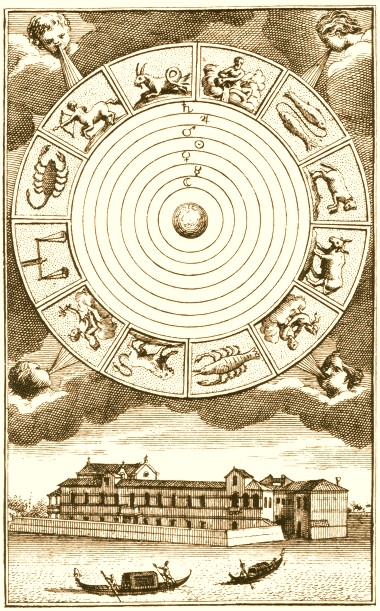
THE ISLAND MONASTERY OF SAN LAZZARO, VENICE IN 1733,
IN THE EARLY YEARS FROM THE ESTABLISHMENT [1717] OF THE MEKHITARIST
ENLIGHTENMENT ORACLE.
ENGRAVING DEPICTING THE ZODIAC WITH THE FOUR WINDS/CORNERS/ANGELS
CARDINAL DIRECTIONS. NOTE THE PLANETARY ALIGNMENT WITH
THE HOUSES OF CAPRICORN AND...AQUARIUS.
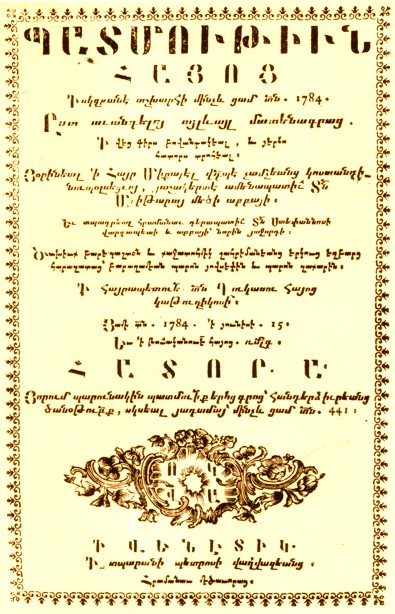
ARMENIAN HISTORY PUBLISHED IN 1784 IN VENICE.

The most viable option discussed was liberation with the aid of the Western
powers and/or Russia.
D E A T H T O T Y R A N N Y A N D T Y R A N T S !
N A T I O N A L L I B E R A T I O N
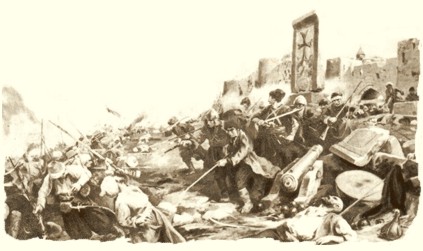
THE NATIONAL LIBERATION MOVEMENT WAS LED BY
PRINCE DAVIT' BEK AND MKHIT'AR SPARAPET OF SIWNIK'